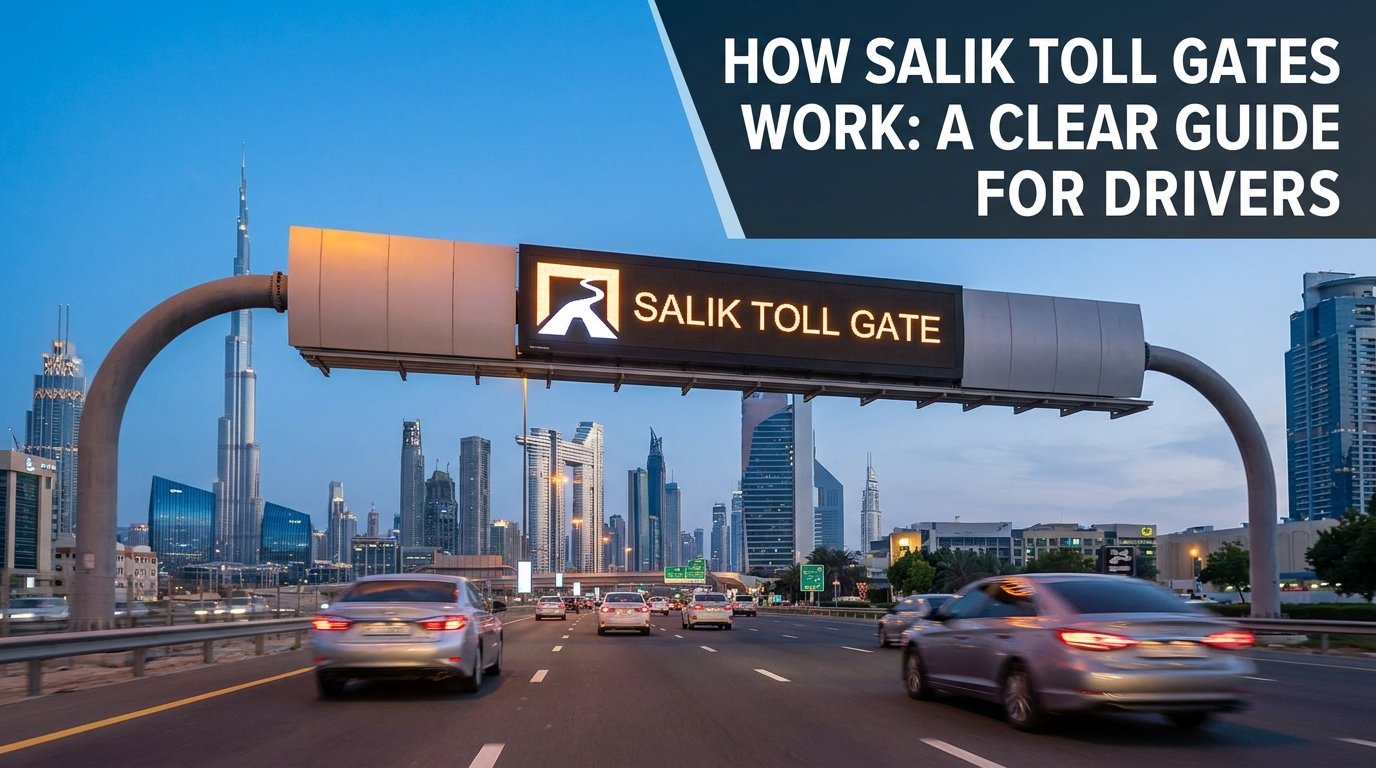
What Is Salik and How Does It Work?
Salik, meaning "clear" or "open" in Arabic, is Dubai’s automatic toll collection system. Using Radio Frequency Identification (RFID) technology, Salik deducts a fee each time your vehicle passes under a toll gate—no need to stop or slow down. The system launched in 2007 and now forms a key part of the city’s traffic management strategy.
Every vehicle that uses Dubai’s major roads must have a small electronic tag affixed to the windshield. This tag is linked to a prepaid account managed by the Roads and Transport Authority (RTA). As you drive through a gate, sensors read the tag and instantly deduct AED 4 from your balance. The entire process is seamless, allowing for smooth traffic flow even during peak hours.
Where Are the Salik Toll Gates in Dubai?
There are currently eight Salik toll gates strategically located across Dubai’s major roads. Each gate is marked clearly by large blue signs and overhead gantries. Here’s where you’ll encounter them:
- Al Barsha – Sheikh Zayed Road, near Mall of the Emirates
- Al Garhoud – near Dubai International Airport (DXB)
- Al Maktoum – on Sheikh Zayed Road, near Business Bay
- Al Safa – Sheikh Zayed Road, before Dubai Canal
- Jebel Ali – Sheikh Zayed Road, heading towards Abu Dhabi
- Airport Tunnel – connecting Deira and DXB terminals
- Mamzar – on Al Khaleej Road, near Dubai-Sharjah border
- Al Mamzar South – recently added on the same road
Most gates are placed on Sheikh Zayed Road (E11), the city’s main artery. If you travel between Dubai and Sharjah daily, the Mamzar gates are particularly relevant. Business travelers frequently cross Al Garhoud when heading to the airport and Al Maktoum or Al Safa when moving through the financial district.
Understanding RTA Salik Charges and How Payment Works
Each passage through a Salik gate costs AED 4 regardless of time of day or vehicle type (subject to change). The RTA manages toll accounts through the official Salik portal or app. Here’s how the payment flow works:
- You open a Salik account and receive a tag linked to your vehicle.
- You top up the account with a minimum of AED 50.
- Every time you pass a gate, AED 4 is automatically deducted.
- When the balance drops below a set threshold, you receive a low-balance notification via SMS or email.
It’s crucial to maintain a sufficient balance. If your account lacks enough funds for five working days after a crossing, a fine of AED 50 is applied per crossing. You can recharge online, at kiosks, or through banking apps, and the updated balance reflects instantly.
💡 Note: Salik tags are vehicle-specific. If you change your car or rent one, you cannot simply transfer your personal tag; the rental vehicle has its own tag, and the rental company manages the associated account.
How Salik Affects Business Travelers and Car Rental Users
For business travelers and founders renting cars in Dubai, understanding how the rental company handles Salik is essential. While rental vehicles are equipped with tags, the billing method varies. Some companies include a certain number of toll crossings in the rental price, while others bill them afterward or charge a deposit. At Goldenlease Rent A Car, for instance, the process is designed to be clear: toll expenses are listed separately on the final invoice, with no hidden markups, allowing renters to track every crossing.
💡 Pro tip: Before renting, ask the provider how Salik charges are handled. Some companies apply an administration fee on top of each crossing, which can add up quickly if you commute daily.
Rental agreements often clarify whether Salik is included, capped, or billed separately. Reading this part of the contract can prevent surprises when you return the car. If you’re a frequent corporate renter, negotiating a flat monthly toll inclusion might be valuable—some providers are open to such arrangements.
Estimating Salik Costs for Daily Business Routes
If you’re a founder traveling between meetings in Dubai, tolls can become a noticeable part of your operational costs. Estimate your daily Salik expenses by counting how many gates you typically pass. For example, a route from Jumeirah Lake Towers (JLT) to Dubai Airport via Sheikh Zayed Road will cross at least three gates (Jebel Ali, Al Barsha, and Al Garhoud), costing AED 12 one way. A round trip would be AED 24, or around AED 600 per month if driven 25 days.
For a business with several employees on the road, these numbers multiply. A simple monthly audit of Salik spend can highlight where route planning or consolidated trips could trim costs—without compromising on time efficiency.
Practical Tips to Manage Salik Costs in Dubai
While you cannot avoid Salik gates on major highways, a bit of planning can help control expenses:
- Check your rental contract for included Salik allowances—some plans cover a set number of crossings.
- Top up your personal Salik account if you’re using your own vehicle regularly; set up auto-recharge to avoid fines.
- Use the RTA’s smart apps to monitor toll usage and track your account balance in real time.
- Plan routes that minimize unnecessary crossings—some destinations offer alternative roads without gates (e.g., using internal streets instead of the highway for short distances).
- If renting, clarify the billing method upfront and keep a running tally of crossings you expect to make.
Common Misconceptions About Salik
Many first-time visitors assume tolls apply only during peak hours, but Salik operates 24/7. Another myth is that multiple passes within a short period incur extra fees—in reality, each crossing is a separate AED 4 charge. Also, tags are not transferable between vehicles without updating the registration with the RTA. Finally, passing under a gate without an active tag or adequate balance can result in fines, so it’s never a loophole to skip.
Understanding Salik is a small but vital part of navigating Dubai efficiently. Whether you’re renting a car or driving your own, keeping an eye on toll usage helps you budget accurately and avoid surprises. By staying informed and planning your routes, you can focus on what matters—your business and your journey.